
John Lewis’s March on Washington Speech: A Deep Dive
Gettysburg College resources offer access to student research, including explorations of John Lewis’s impactful speech, alongside historical documents and related publications like those by Lewis McKenzie Turner.
Digital archives provide PDF formats of the speech, enabling detailed study of its original, often militant, tone – a contrast to King’s famed address.
These resources illuminate the context and lasting legacy of Lewis’s contribution to the Civil Rights Movement, revealing its power and enduring relevance.
Historical Context of the 1963 March
The March on Washington for Jobs and Freedom, held on August 28, 1963, wasn’t a spontaneous event; it was the culmination of decades of struggle against racial segregation and discrimination. John Lewis, as a leader within the Student Nonviolent Coordinating Committee (SNCC), represented a rising tide of youthful activism demanding immediate change.
The early 1960s were marked by intensifying civil rights protests – sit-ins, freedom rides, and voter registration drives – often met with violent resistance, as highlighted in discussions surrounding John Lewis’s speech and related PDF resources. The limitations of existing legislation, and the slow pace of legal challenges, fueled a desire for more direct action.
The march itself was conceived as a demonstration to pressure President Kennedy and Congress to pass meaningful civil rights legislation. Organizers aimed to showcase the breadth and depth of support for equality, bringing together various civil rights groups. Access to primary source materials, like digitized versions of the speech available through institutions like Gettysburg College, provides crucial insight into the era’s tensions and aspirations.
The Civil Rights Movement Leading Up to the March
The Civil Rights Movement gained significant momentum throughout the 1950s and early 1960s, building upon the legacy of abolition and Reconstruction. Landmark cases like Brown v. Board of Education (1954) challenged segregation, but faced fierce resistance, particularly in the South. This resistance fueled the need for more assertive tactics, a sentiment reflected in John Lewis’s approach and documented in analyses of his speech, often available in PDF format.
Organizations like the NAACP focused on legal challenges, while groups like CORE and SNCC embraced nonviolent direct action. The sit-in movement, beginning in 1960, and the Freedom Rides of 1961, demonstrated the courage and commitment of young activists. These events, and the brutal responses they provoked, created a national crisis and increased pressure for federal intervention.
Studying digitized historical documents, including resources from Gettysburg College, reveals how these earlier struggles directly informed the strategies and demands of the 1963 March. Lewis, representing SNCC, embodied this evolving movement, pushing for a more radical vision of equality.
John Lewis’s Role in the Student Nonviolent Coordinating Committee (SNCC)
John Lewis emerged as a pivotal leader within the Student Nonviolent Coordinating Committee (SNCC), a key organization driving the Civil Rights Movement. SNCC distinguished itself through its grassroots organizing and emphasis on direct action, empowering young people to challenge segregation at the local level. Lewis’s early activism involved participating in sit-ins and Freedom Rides, facing arrest and violence for his commitment to racial equality.

As SNCC’s chairman from 1963 to 1966, Lewis became a prominent voice advocating for more radical change. He believed in confronting injustice directly, even if it meant risking personal safety. Analysis of his March on Washington speech, often found in PDF archives like those at Gettysburg College, demonstrates this unwavering dedication.
Lewis’s leadership within SNCC shaped the organization’s strategy and contributed significantly to the growing momentum of the movement. His willingness to challenge the status quo, as evidenced in historical documents and publications by figures like Lewis McKenzie Turner, made him a powerful force for change.
Drafting and Initial Controversy of Lewis’s Speech
The drafting of John Lewis’s March on Washington speech was a collaborative process within the Student Nonviolent Coordinating Committee (SNCC), reflecting the organization’s collective frustrations and demands for immediate change. The initial draft, accessible in PDF format through resources like those found at Gettysburg College, was significantly more radical than other speeches planned for the event.
It directly criticized the Kennedy administration’s civil rights bill, deeming it insufficient and failing to address the deep-seated issues of racial injustice. This forthright critique sparked immediate controversy among organizers, including those associated with the NAACP and the Southern Christian Leadership Conference (SCLC).

Concerns arose that Lewis’s uncompromising tone would alienate potential allies and undermine the broader goals of the march. Pressure mounted to moderate the speech, reflecting the delicate balance between advocating for radical change and maintaining a unified front. Historical accounts, including publications referencing figures like Lewis McKenzie Turner, detail this intense debate.
The Original Speech’s Militant Tone

The original draft of John Lewis’s March on Washington speech, readily available in PDF form through various online archives and academic institutions like Gettysburg College, possessed a distinctly militant tone, sharply contrasting with the more conciliatory rhetoric of other speakers. It was a powerful expression of the frustrations felt by many young activists within the Student Nonviolent Coordinating Committee (SNCC).
Lewis’s words didn’t shy away from directly confronting the systemic racism embedded within American society, labeling the proposed civil rights legislation as inadequate and insufficient. He passionately denounced police brutality and the ongoing denial of basic human rights to African Americans, using forceful language to convey the urgency of the situation.
The speech’s uncompromising nature, as evidenced in the PDF versions, reflected a growing impatience with gradualism and a demand for immediate, transformative change. It was a call to action, challenging the status quo and demanding full equality, a stark contrast to the prevailing political climate.
Pressure to Moderate the Speech Before Delivery
Prior to the March on Washington, significant pressure was exerted on John Lewis to moderate his powerfully worded speech. Concerns arose from organizers, including those close to Martin Luther King Jr., who feared its militant tone could alienate potential allies and jeopardize the event’s overall message of peaceful protest. Accessing the original PDF reveals the extent of the proposed changes.
The primary objection centered on Lewis’s scathing critique of the Kennedy administration’s civil rights bill, deemed too harsh and potentially damaging to ongoing negotiations. Organizers worried it would be portrayed negatively in the media, undermining the march’s positive image. Multiple drafts, often available in digital collections like those at Gettysburg College, demonstrate the revisions.
Lewis faced intense debate and negotiation, ultimately agreeing to remove some of the most inflammatory passages, though he resisted compromising his core message of demanding genuine equality. The PDF versions highlight the delicate balance between maintaining his principles and ensuring the march’s success.
The Delivered Speech at the March on Washington
Despite substantial revisions, John Lewis’s delivered speech at the March on Washington retained a powerful urgency, though tempered from its original, more confrontational form. The final version, accessible in PDF format through various online archives, still challenged the status quo and demanded immediate action on civil rights. It served as a crucial counterpoint to the more conciliatory tone of other speakers.
While omitting direct criticisms of President Kennedy, Lewis passionately articulated the frustrations and experiences of young African Americans facing systemic oppression. He emphasized the need for self-determination and a revolutionary transformation of American society. Studying the PDF reveals the careful crafting of language to convey strength without inciting violence.
Resources from institutions like Gettysburg College offer context, showing how the speech, even in its modified state, represented a bold call for justice. It underscored the impatience of a generation and the unwavering commitment to achieving full equality, leaving a lasting impact on the movement.
Key Themes and Arguments in Lewis’s Speech
John Lewis’s speech, readily available in PDF format from sources like online archives and Gettysburg College collections, centered on the urgent need for genuine, transformative change, not merely incremental progress. A core theme was the inadequacy of existing legislation to protect civil rights activists from violence and systemic injustice. He argued that the proposed civil rights bill was insufficient, failing to address the root causes of racial discrimination;
Lewis powerfully conveyed the frustration and disillusionment of young African Americans, emphasizing their willingness to employ “creative protest” to dismantle segregation. He challenged the notion of gradualism, advocating for immediate and radical action. The PDF text highlights his critique of political compromises that sacrificed the safety and dignity of those on the front lines of the movement.

Furthermore, the speech underscored the importance of self-determination and the right to participate fully in the democratic process, rejecting paternalistic approaches to civil rights. It was a call for empowerment and a demand for equal citizenship;
Comparison to Martin Luther King Jr.’s “I Have a Dream” Speech

While both John Lewis’s address and Martin Luther King Jr.’s “I Have a Dream” speech were delivered at the 1963 March on Washington, they adopted distinct rhetorical approaches. King’s speech, widely accessible in PDF versions, focused on a hopeful vision of racial harmony and integration, employing soaring rhetoric and appeals to shared American ideals. Lewis, conversely, presented a more direct and uncompromising critique of systemic racism, available for study in PDF archives.
The contrast stemmed from differing perspectives; King, a seasoned leader, emphasized unity, while Lewis, representing SNCC, voiced the impatience and militancy of younger activists. Examining the PDF transcripts reveals Lewis’s focus on the immediate dangers faced by civil rights workers and the limitations of current legislation.
Though differing in tone, both speeches shared a common goal: achieving racial justice. King offered a dream, while Lewis issued a demand, both powerfully contributing to the momentum of the Civil Rights Movement, as evidenced in resources from institutions like Gettysburg College.
Impact of the Speech on the Civil Rights Movement
John Lewis’s March on Washington speech, readily available in PDF format from various online archives including resources linked to Gettysburg College, served as a crucial catalyst within the Civil Rights Movement. Though initially controversial due to its militant tone, the speech galvanized younger activists and amplified the urgency for immediate change.
The speech’s uncompromising critique of existing civil rights legislation, detailed in the PDF transcript, pushed the movement beyond incremental reforms and towards a demand for fundamental systemic change. It resonated with those experiencing direct violence and discrimination, bolstering their resolve.
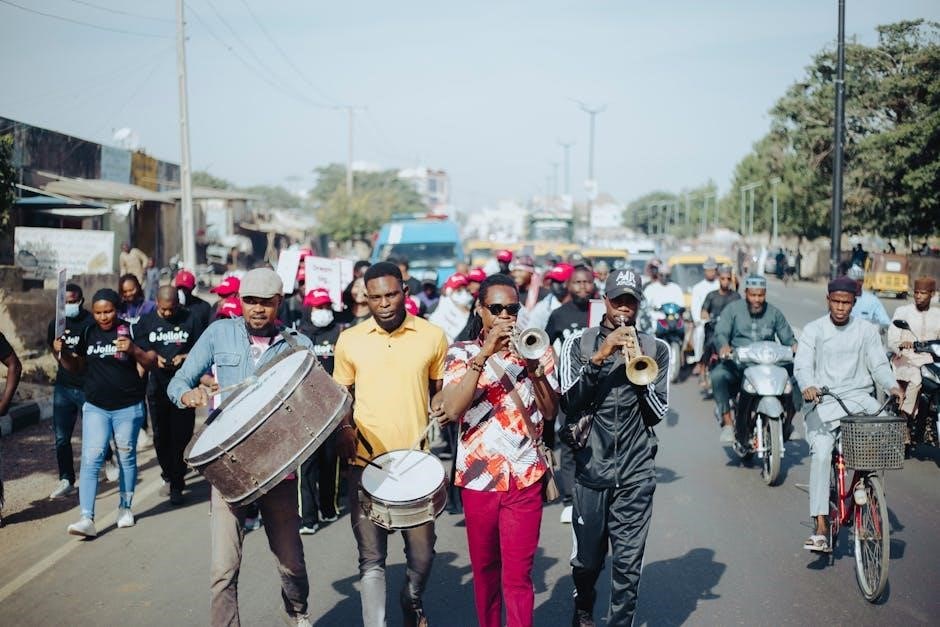
While overshadowed initially by King’s “I Have a Dream,” Lewis’s speech, as documented in publications like those by Lewis McKenzie Turner, ultimately broadened the movement’s scope, challenging complacency and inspiring more radical action. Its lasting impact lies in its honest portrayal of the struggle and its unwavering commitment to justice, accessible for study today.
Immediate Reactions and Media Coverage

Initial reactions to John Lewis’s March on Washington speech, now widely accessible in PDF form through resources like those found at Gettysburg College, were markedly divided. While many within the Student Nonviolent Coordinating Committee (SNCC) embraced its uncompromising message, mainstream media and some civil rights leaders expressed concern over its perceived militancy.
News coverage, as reflected in historical archives, often focused on the speech’s controversial elements, particularly its critique of the Kennedy administration’s civil rights bill. The PDF transcript reveals the directness of Lewis’s language, which contrasted sharply with the more conciliatory tone of other speakers;
Reports highlighted the pressure exerted on Lewis to moderate his remarks before delivery, showcasing the internal tensions within the movement. Publications like those authored by Lewis McKenzie Turner offer context to the era’s media landscape and the challenges faced by activists seeking broader coverage and understanding.
Long-Term Significance and Legacy
The enduring significance of John Lewis’s March on Washington speech, readily available in PDF format via institutions like Gettysburg College, lies in its uncompromising call for genuine equality and its foreshadowing of the continued struggle for civil rights. Though initially overshadowed by Martin Luther King Jr.’s address, its radical honesty has gained prominence over time.
Access to the speech’s transcript, including versions detailed in publications related to figures like Lewis McKenzie Turner, allows for a deeper understanding of its impact on subsequent activism. It served as an inspiration for younger generations of civil rights advocates, demonstrating the power of direct action and unwavering conviction.
The PDF resources highlight how Lewis’s speech challenged the status quo and pushed the boundaries of acceptable discourse, solidifying his legacy as a fearless champion of justice and a pivotal figure in American history. Its continued study ensures his message resonates today.
Accessing the Speech: John Lewis March PDF Resources
Numerous online platforms and academic institutions provide access to John Lewis’s powerful March on Washington speech in PDF format. Gettysburg College, specifically through its digital collections like The Cupola, offers valuable resources for researchers and students interested in studying the speech’s historical context and content.
These PDF versions allow for detailed textual analysis, enabling examination of the original draft and any modifications made before delivery. Researchers can compare the speech to related historical documents, including publications by figures like Lewis McKenzie Turner, to gain a broader understanding of the era.
Digital archives and online repositories ensure the speech remains accessible to a wide audience, fostering continued engagement with Lewis’s message of equality and justice. The availability of these resources is crucial for preserving and promoting his legacy for future generations.
Availability of the Speech Text in PDF Format
The complete text of John Lewis’s March on Washington speech is readily available in PDF format through several online sources, facilitating academic study and public access. Institutions like Gettysburg College host digitized versions within their scholarly repositories, such as The Cupola, ensuring preservation and broad dissemination.
These PDF documents often include contextual information, such as details about the speech’s drafting process and the controversies surrounding its initial, more militant tone. Accessing the speech in PDF allows for easy searching, annotation, and citation, benefiting researchers and students alike.

Furthermore, digital archives dedicated to the Civil Rights Movement frequently feature the speech, alongside related materials like correspondence and contemporary media coverage. The widespread availability in PDF format underscores the speech’s enduring significance and its importance as a primary source document.
Online Archives and Digital Collections Featuring the Speech
Numerous online archives and digital collections prominently feature John Lewis’s March on Washington speech, often in accessible PDF formats. Gettysburg College’s digital resources, including The Cupola, provide scholarly access to the speech and related historical documents, fostering research and understanding.
Beyond academic institutions, several organizations dedicated to preserving Civil Rights history maintain comprehensive digital collections. These platforms offer not only the speech text but also audio and video recordings, photographs, and contextual materials, enriching the user experience.
Researchers can explore digitized collections from libraries, museums, and historical societies, uncovering a wealth of information surrounding the March and Lewis’s pivotal role. The availability of these resources online democratizes access to primary source materials, enabling broader engagement with this crucial moment in American history, often downloadable as a PDF.
Gettysburg College and Related Historical Documents
Gettysburg College serves as a significant repository for research concerning John Lewis’s March on Washington speech, offering access through its digital scholarship platform, The Cupola. This open-access resource features student research papers directly analyzing the speech and its historical context, often available as downloadable PDF documents.
The college’s special collections also house related historical documents, providing a broader understanding of the era and the forces shaping the Civil Rights Movement. These materials complement the study of Lewis’s speech, illuminating the political and social landscape of 1963.
Furthermore, connections can be drawn to Gettysburg’s own historical significance – the site of Lincoln’s famous address – prompting reflection on the evolution of American ideals regarding equality and justice. Exploring these parallel narratives enriches the appreciation of Lewis’s powerful message, readily accessible through digitized PDF resources.
Lewis McKenzie Turner and Related Publications
Lewis McKenzie Turner’s publications, such as works from 1932, offer valuable contextual insights when studying John Lewis’s March on Washington speech, even if not directly focused on the event itself. These historical texts, sometimes available in PDF format through digital archives, illuminate the social and political climate of the time, providing a deeper understanding of the challenges faced by the Civil Rights Movement.
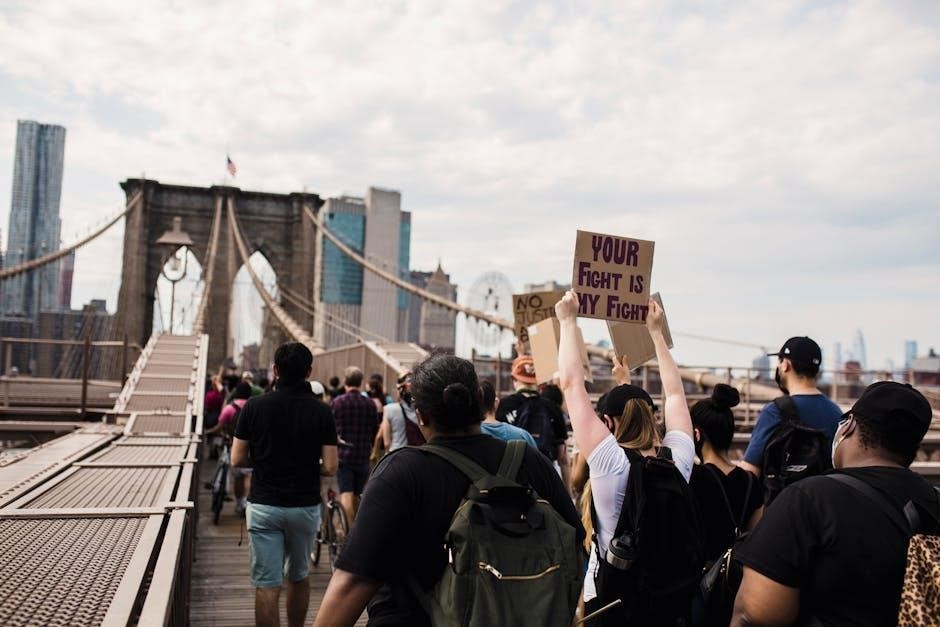
While Turner’s work may predate the March, it contributes to a broader understanding of the historical currents that fueled the demand for racial equality. Examining contemporaneous publications alongside the speech itself – often accessible as a PDF – allows for a nuanced interpretation of Lewis’s message.
Researchers can utilize these resources to trace the evolution of thought and activism, enriching their analysis of Lewis’s contribution and its lasting impact. Accessing these historical documents, including digitized PDF versions, is crucial for comprehensive research.