Paleo Diet Meal Plan PDF: A Comprehensive Guide
Navigating the Paleo landscape requires a detailed plan, often sought in PDF format. This guide explores mimicking hunter-gatherer diets, cutting grains, dairy, and processed foods for optimal health.

What is the Paleo Diet?
The Paleo Diet, short for Paleolithic, is a dietary approach rooted in the eating habits of our hunter-gatherer ancestors. It’s based on the premise that the human body is genetically best suited to the foods our ancestors consumed before the advent of agriculture. This means prioritizing whole, unprocessed foods that were available during the Paleolithic era – roughly 2.5 million to 10,000 years ago.
Essentially, it’s an attempt to realign our modern diets with our evolutionary biology. The core idea isn’t simply about “eating like a caveman,” but rather about focusing on nutrient-dense foods that support optimal health and well-being. Modern interpretations acknowledge the complexities of modern life, but the foundational principles remain consistent: prioritize whole foods, lean proteins, healthy fats, fruits, and vegetables.
The diet’s popularity stems from its potential benefits for weight management, improved blood sugar control, and reduced inflammation. However, it’s crucial to understand that it’s not a rigid set of rules, and individual adaptations are often necessary to make it sustainable and enjoyable.
The Core Principles of Paleo Eating
At its heart, Paleo eating centers around consuming foods that were consistently available to our Paleolithic ancestors. This translates to a focus on whole, unprocessed options, prioritizing nutrient density over calorie counting. A cornerstone principle is the exclusion of foods introduced with the agricultural revolution – namely grains, legumes, and dairy.
Emphasis is placed on lean proteins like grass-fed meats, poultry, and fish, alongside abundant fruits and vegetables. Healthy fats, sourced from avocados, nuts, seeds, and olive oil, are also integral. The diet encourages a higher intake of protein and healthy fats compared to the standard modern diet, while limiting carbohydrates primarily to those found in fruits and vegetables.
Furthermore, Paleo promotes mindful eating and a connection to food sources. It’s about recognizing that our bodies evolved eating real, whole foods, and striving to replicate that in the modern world. It’s a lifestyle approach, not just a temporary diet.
Foods Allowed on the Paleo Diet
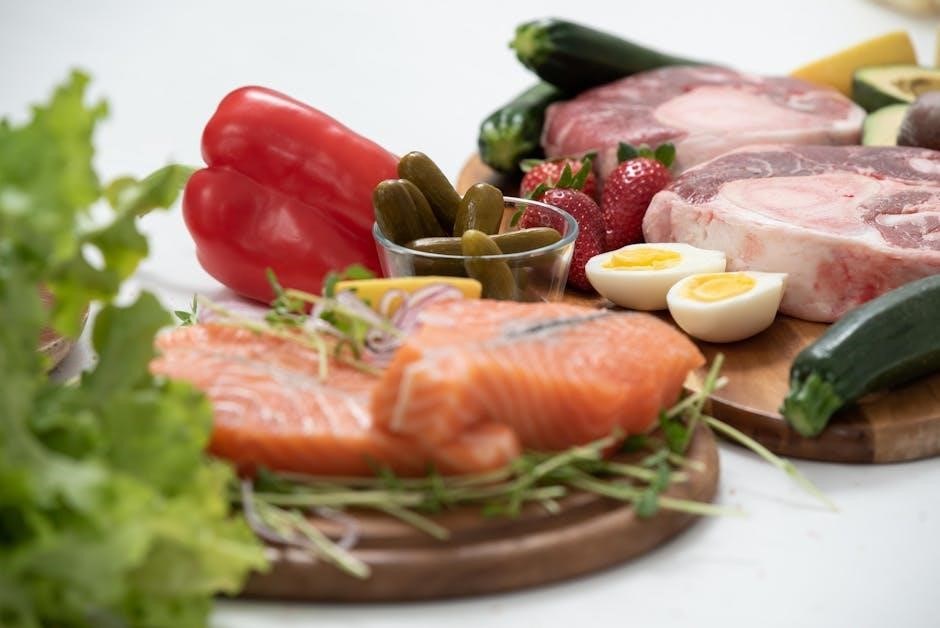
The Paleo diet champions a diverse range of whole, unprocessed foods mirroring what our hunter-gatherer ancestors consumed. Meat, particularly grass-fed, is a staple, alongside poultry and wild-caught fish, providing essential proteins and fats. Seafood, rich in omega-3 fatty acids, is highly encouraged.
Fruits and vegetables form the carbohydrate base, offering vital vitamins, minerals, and fiber. Non-starchy vegetables like leafy greens, broccoli, and cauliflower are unlimited, while fruits are enjoyed in moderation due to their natural sugar content. Healthy fats are sourced from avocados, olive oil, coconut oil, nuts (almonds, walnuts), and seeds (chia, flax).
Eggs, another nutrient powerhouse, are a Paleo favorite. Herbs and spices are freely used for flavoring, adding antioxidants and enhancing meals. Bone broth, lauded for its gut-healing properties, is also a permitted and beneficial addition to the Paleo lifestyle.
Foods to Avoid on the Paleo Diet
The Paleo diet strictly excludes food groups introduced with the advent of agriculture, aiming to align with ancestral eating patterns. Grains – wheat, rice, corn, barley, and oats – are entirely off-limits, as they are considered relatively new additions to the human diet and potential sources of inflammation.
Dairy products, including milk, cheese, and yogurt, are also prohibited due to lactose intolerance concerns and their association with modern agricultural practices. Legumes – beans, lentils, and peanuts – are avoided because of their anti-nutrients and potential digestive issues. Refined sugar, in all its forms, is a definite no-go, along with processed foods containing artificial ingredients.
Furthermore, refined vegetable oils like soybean, corn, and canola oil are excluded, favoring healthier fats. Potatoes, while a vegetable, are sometimes limited due to their high starch content. Ultimately, the goal is to eliminate foods believed to contribute to inflammation and chronic disease.

Creating Your Paleo Meal Plan
Building a successful Paleo plan involves understanding macronutrient balance and careful meal structuring. A well-designed PDF resource can simplify this process, ensuring dietary adherence and success.
Understanding Macronutrient Ratios for Paleo
Optimizing your Paleo diet hinges on understanding macronutrient ratios – protein, fats, and carbohydrates. Unlike some modern diets emphasizing carbohydrate restriction, Paleo focuses on a balanced approach mirroring ancestral eating patterns. A typical Paleo macronutrient breakdown often falls around 30-35% protein, 40-50% fats, and 15-25% carbohydrates, though individual needs vary based on activity level, body composition, and metabolic factors.
Protein is crucial for muscle maintenance and repair, sourced from lean meats, fish, and eggs. Fats, primarily from avocados, nuts, seeds, and olive oil, provide sustained energy and support hormone production. Carbohydrates come from non-starchy vegetables and limited fruits, offering essential vitamins and fiber.
A detailed Paleo meal plan PDF will often outline these ratios, providing guidance on portion sizes and food choices to achieve optimal balance. Ignoring these ratios can hinder weight loss or energy levels. Utilizing a PDF resource simplifies tracking and ensures you’re fueling your body effectively with the right proportions of each macronutrient for sustained health and vitality.
Sample 7-Day Paleo Meal Plan
A comprehensive Paleo meal plan PDF often includes a sample 7-day schedule to illustrate practical application. This provides a framework for incorporating Paleo principles into daily life, removing the guesswork of meal planning. Expect a focus on whole, unprocessed foods, with varied protein sources, healthy fats, and abundant vegetables.
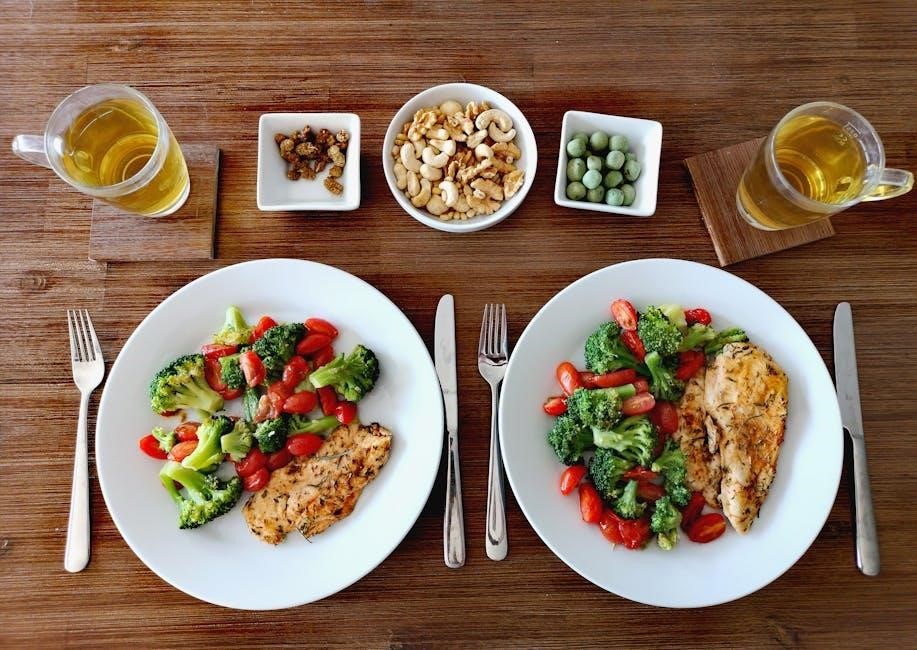
Typical daily inclusions might feature: breakfast with eggs and avocado; lunch with a large salad featuring grilled chicken or fish; dinner with baked salmon and roasted sweet potatoes. Snacks could include a handful of nuts or fruit. A well-structured PDF will detail specific recipes and portion sizes.
Remember, this is a template. Adjustments are crucial based on individual caloric needs and preferences. A quality Paleo meal plan PDF will emphasize flexibility and encourage experimentation with Paleo-approved ingredients. Utilizing such a plan streamlines the transition and ensures consistent adherence to the diet’s core principles, promoting long-term success.
Day 1: Paleo Meal Ideas
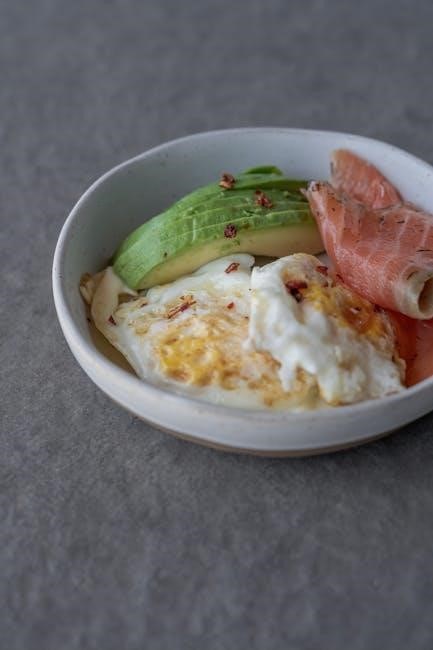
Kickstarting your Paleo journey with a well-defined Day 1 is crucial, often detailed within a comprehensive meal plan PDF. Begin with a breakfast of scrambled eggs cooked in coconut oil, alongside a side of sliced avocado and a small portion of berries – providing healthy fats and essential nutrients.
For lunch, consider a large salad featuring grilled chicken or wild-caught salmon, mixed greens, cucumber, bell peppers, and a lemon-olive oil dressing. Avoid any processed dressings or croutons. Dinner could be a lean steak with roasted broccoli and sweet potato wedges seasoned with herbs and spices.
Snack options include a handful of almonds or a small apple with almond butter. A detailed Paleo PDF will offer specific recipes and portion sizes for each meal, ensuring adherence to the diet’s principles. Remember to drink plenty of water throughout the day to stay hydrated and support optimal digestion.
Day 2: Paleo Meal Ideas
Continuing your Paleo exploration, Day 2 builds upon the foundation established, often outlined in a detailed meal plan PDF. Start your day with a smoothie crafted from coconut milk, spinach, a banana (in moderation), and a scoop of Paleo-friendly protein powder – a quick and nutritious option.
Lunch can feature ground turkey stir-fry with mixed vegetables (broccoli, carrots, snap peas) cooked in coconut aminos, a soy sauce alternative. For dinner, try baked salmon with asparagus and a side of mashed cauliflower, seasoned with garlic and herbs. This provides a good balance of protein, healthy fats, and fiber.
Snack ideas include celery sticks with guacamole or a small portion of mixed berries. A well-structured Paleo PDF will provide precise measurements and cooking instructions. Prioritize whole, unprocessed foods and stay hydrated throughout the day. Remember, consistency is key to experiencing the benefits of the Paleo diet.

Day 3: Paleo Meal Ideas
Day 3 of your Paleo journey, often detailed within a comprehensive meal plan PDF, focuses on variety and sustained energy. Begin with scrambled eggs cooked in coconut oil with diced sweet potatoes and spinach – a hearty and satisfying breakfast.
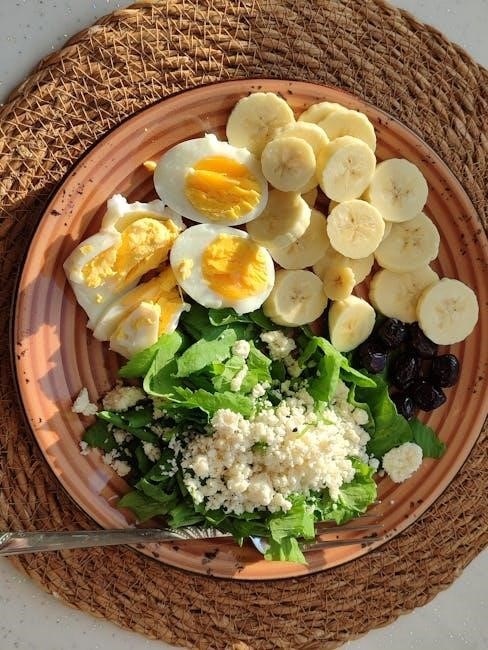
For lunch, consider a large salad with grilled chicken or shrimp, avocado, mixed greens, and a lemon-olive oil dressing. Dinner could be a flavorful pork tenderloin roasted with Brussels sprouts and a side of roasted butternut squash. This combination delivers essential nutrients and keeps you feeling full.
Snack options include a handful of almonds or a small apple with almond butter. A well-designed Paleo PDF will offer substitutions based on dietary preferences. Remember to drink plenty of water and focus on incorporating diverse flavors to prevent palate fatigue. Adhering to the principles outlined in your PDF will maximize your results.
Paleo Diet and Weight Loss
Paleo’s focus on whole foods and elimination of processed items supports effective weight management. A detailed PDF plan aids in achieving these goals through structured eating.
How Paleo Supports Weight Management
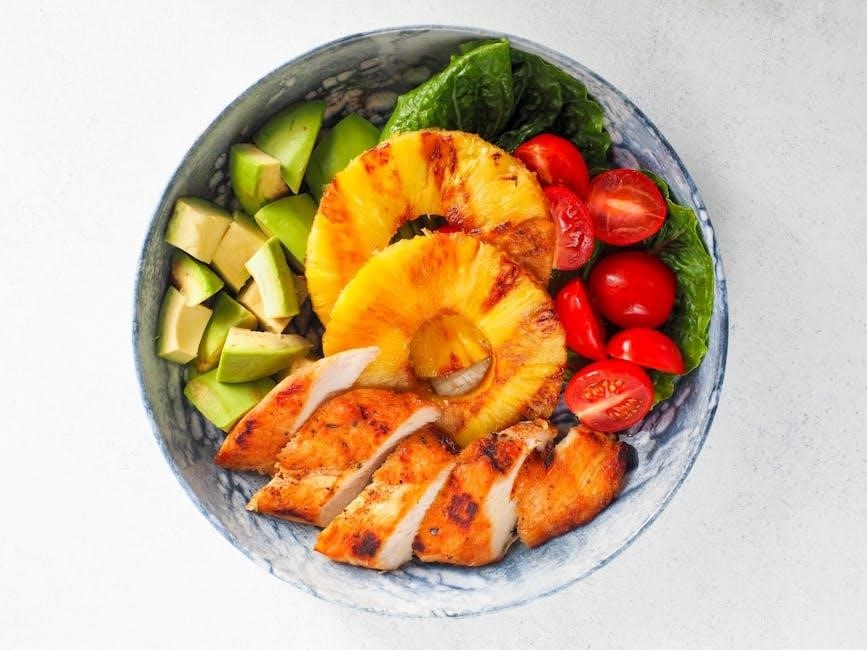
The Paleo diet’s effectiveness for weight loss stems from several key principles, often detailed within a comprehensive meal plan PDF. By eliminating grains, dairy, and processed foods – staples in many modern diets – Paleo naturally reduces calorie intake and minimizes exposure to inflammatory ingredients. This shift encourages the body to utilize stored fat for energy, promoting weight reduction.
A well-structured Paleo meal plan PDF emphasizes nutrient-dense foods like lean proteins, fruits, vegetables, and healthy fats. These foods promote satiety, meaning you feel fuller for longer, reducing cravings and overeating. The focus on whole, unprocessed foods also stabilizes blood sugar levels, preventing energy crashes and further minimizing unhealthy snacking.
Furthermore, the higher protein intake inherent in a Paleo diet boosts metabolism and supports muscle mass preservation during weight loss. Muscle tissue burns more calories at rest than fat tissue, contributing to a more efficient metabolism. Utilizing a PDF plan ensures adherence and provides a clear roadmap for successful weight management, aligning with ancestral eating patterns for optimal results.
Paleo vs. Other Popular Diets
Comparing the Paleo diet, often outlined in a detailed meal plan PDF, to other popular diets reveals distinct differences. Unlike the Mediterranean diet, which includes whole grains and legumes, Paleo strictly excludes them, mirroring a hunter-gatherer lifestyle. While both emphasize whole foods, the restriction level differs significantly.
Compared to low-carb diets like Keto, Paleo allows for more carbohydrates from fruits and vegetables, prioritizing nutrient density over strict carb limitation. Keto focuses on forcing the body into ketosis, while Paleo aims for a more natural metabolic state. A Paleo meal plan PDF will showcase this balance.
Vegan and vegetarian diets contrast sharply with Paleo, as the latter includes animal proteins – a cornerstone of ancestral eating. Paleo’s emphasis on healthy fats also distinguishes it from low-fat diets. Ultimately, a Paleo diet, as detailed in a PDF guide, offers a unique approach focused on evolutionary consistency, differing substantially from these mainstream alternatives.
Practical Tips for Following a Paleo Diet
Success hinges on preparation! Utilize a Paleo meal plan PDF for grocery lists and recipes. Prioritize whole, unprocessed foods, and embrace mindful eating habits consistently.
Grocery Shopping for Paleo Success
Embarking on a Paleo journey begins with a strategic grocery trip. A well-defined Paleo meal plan PDF serves as your shopping blueprint, ensuring you acquire the necessary ingredients and avoid temptations. Focus on filling your cart with nutrient-dense, whole foods mirroring what our ancestors consumed.
Prioritize high-quality proteins like grass-fed meats, wild-caught fish, and free-range poultry. Load up on an abundance of colorful vegetables – leafy greens, cruciferous varieties, and vibrant root vegetables are essential. Don’t forget healthy fats from avocados, nuts, seeds, and olive oil.
Carefully scrutinize labels! Avoid products containing grains, legumes, dairy, refined sugars, and processed oils. A Paleo meal plan PDF often includes a “foods to avoid” list, acting as a handy reference in the supermarket. Look for certifications indicating grass-fed or organic options when possible. Planning meals around sales and seasonal produce can also help manage costs. Remember, preparation is key to Paleo success, and a thoughtful grocery list is your first step!
Paleo Meal Prep Strategies
A Paleo meal plan PDF is significantly easier to follow with effective meal preparation. Dedicate a few hours each week to prepping ingredients, saving valuable time during busy weekdays. Batch cooking is your best friend – roast a large quantity of protein and vegetables simultaneously.
Pre-chop vegetables for quick salads or stir-fries. Prepare individual portions of snacks like nuts, seeds, or fruit. Utilize airtight containers to store prepped components, extending their freshness. Consider making larger batches of soups or stews, perfect for lunches or dinners.
Leverage your Paleo meal plan PDF to guide your prep. Focus on recipes that utilize similar ingredients, minimizing waste. Don’t underestimate the power of pre-cooked proteins – grilled chicken or baked salmon can be added to various meals. Proper meal prep transforms a potentially challenging diet into a manageable lifestyle, ensuring consistent adherence to your Paleo goals and maximizing your success.
Finding Paleo Recipes and Resources (PDFs)
Numerous online resources offer Paleo recipes and downloadable meal plan PDFs. Websites dedicated to Paleo living frequently provide free sample meal plans and recipe collections in PDF format, ideal for beginners. Searching for “Paleo meal plan PDF” yields a wealth of options, catering to various dietary needs and preferences.
Explore blogs specializing in Paleo cuisine; many offer downloadable recipe books or weekly meal plans. Social media platforms like Pinterest are treasure troves of Paleo recipe links and PDF resources. Consider investing in professionally designed Paleo cookbooks or meal planning systems, often available as digital downloads.
Remember to evaluate the source’s credibility before relying on a Paleo meal plan PDF. Look for plans created by registered dietitians or certified health professionals. Prioritize resources that emphasize whole, unprocessed foods and align with the core principles of the Paleo diet. Utilizing these resources simplifies adherence and expands your culinary repertoire.
Potential Challenges and Considerations
Adapting to Paleo can be tricky in modern life, with “grey area” foods causing confusion. Balancing ancestral eating with current lifestyles requires mindful choices and realistic expectations.
The “Grey Area” Foods in Paleo
Determining what truly aligns with Paleo principles isn’t always straightforward; certain foods exist in a “grey area,” sparking debate among followers. While the core tenets – eliminating grains, legumes, and dairy – are generally agreed upon, the inclusion of items like white rice, potatoes, and even certain sweeteners often generates discussion.
Potatoes, for instance, are non-native tubers, raising questions about their ancestral appropriateness. Some Paleo proponents exclude them due to their starch content and potential inflammatory effects, while others permit them in moderation, especially sweet potatoes. Similarly, white rice, though a grain, is sometimes considered less problematic than gluten-containing grains.
Legumes, like beans and lentils, are generally avoided due to their phytic acid content, which can hinder nutrient absorption. However, proper preparation methods, such as soaking and sprouting, can reduce phytic acid levels, leading some to cautiously reintroduce them.
Ultimately, navigating these grey areas requires individual assessment and experimentation. Paying attention to how your body responds to different foods is crucial. A strict Paleo approach might be necessary for those with autoimmune conditions or sensitivities, while others may find a more flexible interpretation sustainable.
Adapting Paleo to Modern Life
Replicating a hunter-gatherer diet in the 21st century presents unique challenges. Strict adherence can feel restrictive and impractical, demanding significant lifestyle adjustments. Successfully integrating Paleo into modern life necessitates flexibility and mindful modifications, acknowledging the inherent disconnect between our ancestral past and present realities.
Sourcing truly “Paleo” foods – grass-fed meats, wild-caught fish, and organic produce – can be expensive and time-consuming. Prioritizing quality where possible, while making informed compromises, is key. Focusing on whole, unprocessed foods remains paramount, even if they aren’t perfectly aligned with strict Paleo guidelines.
Social situations and dining out also require adaptation. Explaining dietary restrictions can be awkward, but preparation and proactive communication can help. Choosing protein and vegetable-focused options, and politely declining grains, dairy, and sugary sauces, are effective strategies.
Recognizing that perfection isn’t attainable is vital. A sustainable Paleo lifestyle isn’t about rigid rules, but about making conscious food choices that support overall health and well-being. It’s about finding a balance that works for you.
Long-Term Sustainability of the Paleo Diet
Maintaining a Paleo lifestyle long-term hinges on its adaptability and enjoyment. While initial results can be motivating, sustained success requires a shift from restrictive “dieting” to a sustainable way of eating. A well-structured Paleo meal plan PDF can be instrumental in achieving this, providing guidance and variety.
The key lies in finding a balance between adherence to core principles and personal preferences. Rigidly eliminating all non-Paleo foods can lead to feelings of deprivation and eventual burnout. Allowing for occasional, mindful indulgences can enhance long-term compliance.
Focusing on the positive aspects – increased energy, improved digestion, and reduced inflammation – reinforces commitment. Building a repertoire of delicious and satisfying Paleo recipes, readily accessible through PDFs and online resources, prevents mealtime monotony.
Ultimately, the Paleo diet’s sustainability depends on its integration into a holistic lifestyle that prioritizes movement, stress management, and adequate sleep. It’s not just about what you eat, but how you live.